Pool service checklist: daily, weekly, and seasonal tasks
A standard pool service visit covers a consistent, repeatable set of checks: chemistry, skimming, baskets, water level, a visual pass on equipment. Weekly extras, filter cleaning, pressure checks, add a bit more on top. Seasonal opening and closing add a separate set of steps entirely, and don’t apply at all in climates where pools run year-round. The checklists below are built to copy, print, or turn into a digital record, whichever fits where your business is today.
What belongs on every routine visit checklist
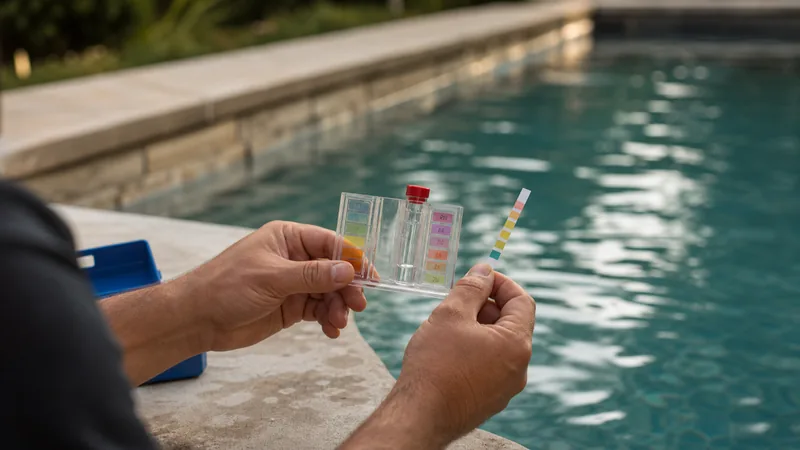
This is the core list that applies to essentially every pool service visit, regardless of season or property:
- Test and record pH
- Test and record free chlorine
- Test and record total alkalinity
- Skim the surface for debris
- Empty and clean the skimmer basket
- Empty and clean the pump basket
- Check the water level and top off if needed
- Visually inspect visible equipment for leaks, unusual noise, or damage
- Brush pool walls and steps on a rotating schedule (not necessarily every visit)
- Note anything unusual for the customer record
Every chemistry item on this list is a test-and-record step, not a dosing instruction. A checklist should tell a technician what to measure and log, not how much of anything to add. Dosing decisions belong to a trained technician’s judgment on site, not a generic checklist or an app.
Weekly and bi-weekly tasks beyond the basics
Some tasks don’t need attention on every single visit but do need a regular slot on a weekly or bi-weekly cadence:
- Clean or backwash the filter when pressure indicates it’s needed
- Check filtration system pressure against its normal baseline
- Inspect automatic pool cleaners for wear, tangles, or reduced performance
- Check the heater (if present) for proper operation
- Confirm timers or automation settings still match the customer’s actual schedule
These items are easy to skip when a route gets busy, since none of them are as immediately visible as a dirty skimmer basket. Building them into a recurring checklist item, rather than relying on remembering to check, keeps them from quietly slipping for weeks at a time.
Seasonal opening checklist
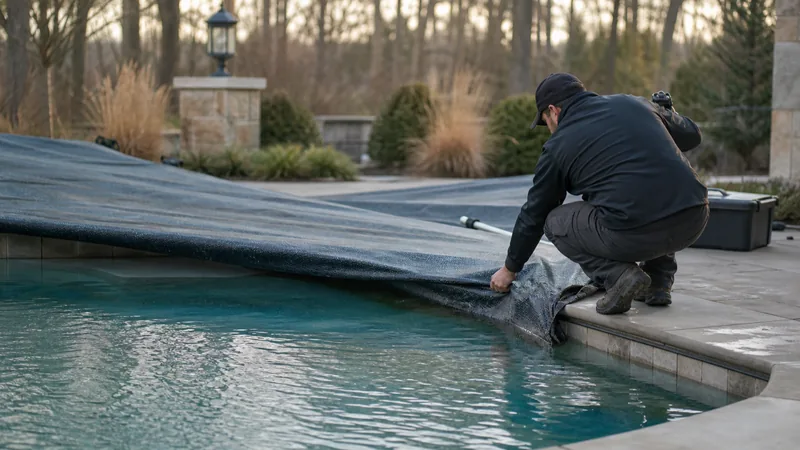
For pools in climates with a real off-season, opening for the year adds a distinct set of steps that don’t apply to a routine visit:
- Remove and inspect the winter cover for damage before storing it
- Reinstall any equipment removed for winterizing (ladders, skimmer parts, plugs)
- Inspect all visible equipment after months of inactivity
- Run the pump and filter system and check for leaks or unusual sounds on first startup
- Do an initial water test and full chemical balance before returning to routine service
- Check safety equipment (rails, covers, alarms if applicable)
Seasonal closing checklist
Closing for the season is a separate process from a routine visit, focused on protecting the pool and equipment through months of reduced or no use:
- Do a final water balance before closing (pH, chlorine, alkalinity)
- Lower the water level if required by the cover and climate
- Clean and store removable equipment (ladders, skimmer baskets, accessories)
- Winterize the pump, filter, and plumbing lines per the equipment manufacturer’s guidance
- Install and secure the winter cover
- Do a final equipment check before leaving the property for the season
This checklist doesn’t apply everywhere. In climates where pools stay in use all year, like much of Arizona or Florida, opening and closing checklists mostly don’t come into play at all. Routine and periodic maintenance checklists cover essentially the whole scope of work in those markets instead.
Why a written checklist protects your business
A checklist that exists somewhere other than a technician’s memory does two things at once. It standardizes what gets checked on every visit, which matters most the moment more than one technician works a route, or when someone fills in for a regular tech who’s out. And it gives the business something concrete to point to if a customer ever questions what was actually done on a given visit, rather than relying on someone’s recollection of a specific Tuesday weeks later.
That protection only holds up if the checklist is actually documented somewhere per visit, not just followed from memory. A digital service report tied to the specific visit date and property turns a mental habit into a real, retrievable record.
Turning a paper checklist into a digital one
A paper checklist is a perfectly reasonable way to start, especially for one person running a handful of routes. It stops scaling once a second or third technician joins, or once a route grows large enough that keeping every paper sheet organized becomes its own small chore. At that point, the checklist items above, especially the chemistry readings, are worth recording in a dated chemistry log instead of on paper, so the history stays searchable and tied to the right property no matter who serviced it. See what to record in a chemical log for more detail specifically on that piece of the checklist.
See PoolTechDesk's pricing for a system that turns this checklist into a recorded service history for every property on your route.